Hi, I'm Harry. If a friend forwarded this to you, welcome, and you can subscribe here to get it every week. If you enjoy it, I'd be grateful if you passed it on.
Observations and practical guidance from someone deploying AI inside companies every day.
Find the bottleneck before picking the project
If you can't state the return before you build, you're wasting your time.
Anthropic started trading on Thursday after the largest IPO on record. The shares closed up 17% on day one and gave back 8.5% on day two, as the Nasdaq fell more than 5% and wiped out its gains for the year.
Meanwhile, Expeditors showed its investors how it's moving 8.9% more shipments with almost the same headcount. I've gone through the slides to see how.
Elsewhere, P&G is targeting $10 billion of savings, Palo Alto spent $4.5 billion on open-weight models and Signal started blocking AI agents.
But first, why I think hours saved is a poor way to measure the return on AI, and what I'd work out before building anything.
In today's Acquisition Intelligence:
From The Trenches:
Find the bottleneck before picking the project
AI At Work:
Expeditors: more shipments with the same staff
What The Builders Are Saying:
Turning tokens into dollars, the cost of change management and giving agents goals rather than instructions
News Digest:
Anthropic's first two days
Other Interesting Things I've Read or Seen:
P&G's $10 billion plan, Palo Alto and Applied Compute, EQT and Edra, Signal versus agents, Marsh's cyber data, GTCR and Global Payments, faster drug discovery, IPO fees and Grand Theft Auto VI
From The Trenches
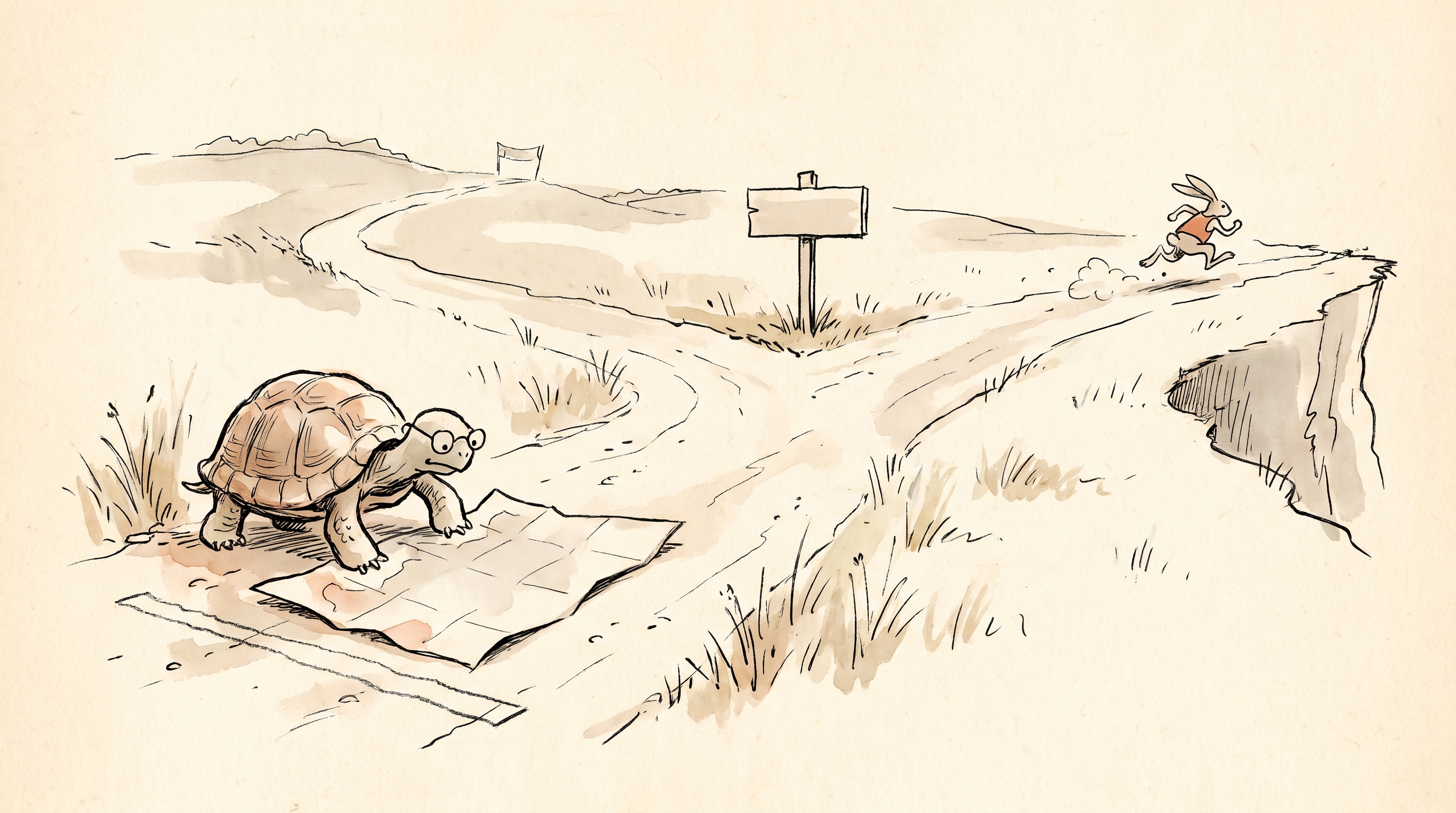
Find the bottleneck before picking the project
If you can't state the return before you build, you're wasting your time.
We spend a lot of time defining the return on every engagement before we build anything. A client put the reason well on a recent call. Saving time is great, he said, but what's his sales team going to do with it? “Spend more time on Facebook?”
It's a neat summary of why the return on AI is so hard to measure, and why it so often gets measured badly. Hours saved is the easiest number to produce and generally a poor one, because it assumes the freed-up time turns into something profitable without anybody deciding what.
I think it's also a great encapsulation of where we are with AI at the moment. People recognise it's going to be valuable and they're rushing to work out how to deploy it. Not enough work is going into defining the hard return that would justify the investment, and the investment in time alone is massive.
How do I know? You only need to look at the companies limiting access to AI tools, which I've mentioned in recent weeks. Goldman Sachs restricted Claude Code for most bankers and traders in October after reviewing productivity and risk. Apple reportedly cut the daily AI allowance for some engineers from $300 to $200, and Bloomberg's sources said few people were using the full amount anyway.
What does that tell you? If this was providing value, they wouldn't cut it. They'd be asking for the limit to go up. It doesn't matter whether the allowance goes from $300 to $200 or from $300 to $50, because a company that can see what it's getting back doesn't cap it at all. I've made this point ad nauseam, but you can't hand everyone a ChatGPT or Claude licence and expect miracles.
We're making some progress. Teams are moving beyond the licence and recognising that becoming “AI native” takes a lot more infrastructure and work. The biggest gap is still how little effort goes into justifying the return. If you can't clearly say what it is, what's the point?
So my argument this week is simple: you have to do the work to define the return up front. Very few are.
There are only three places a return can come from. You can win more of the business you already do, sell something you couldn't offer before, or deliver what you sell at a lower cost. To know which applies to you, look at your data, find the bottlenecks and work out what fixing each one is worth.
AI is a tool for fixing them, and a very good one. But if you haven't defined the outcome first, how would you know whether a project added any value?
The meeting brief that turned into a data project
I saw this recently in a brief that came across our desk. A leadership advisory firm wanted an agent to send its partners a short note before each meeting, covering who's in the room and what the firm already knows about them. Sounds good. Meeting prep is useful, and building an agent to write that note isn't hard.
The hard part is everything the agent would read from. By the firm's own admission, its Salesforce records hadn't been filled in accurately, much of who-knows-whom lived in senior people's heads, and the board data it wanted would have to be licensed from an outside provider. Fixing all of that takes a great deal of time and effort, and it's where the value sits.
Yet the project was being justified by time saved on meeting prep. That will never pay for it. An agent pulling from poor data produces a poor brief, and cleaning up the data costs far more than a few hours of prep a week will return. We see this nine times out of ten: the thing people ask for is small and the work underneath it is large.
The thing people ask for is small and the work underneath it is large.
Would better meeting prep help the partners? Maybe, on the margin. Centralising what the firm knows is worth doing, but for bigger reasons than a briefing note, and those are the questions I'd be asking first. Where did the firm's best mandates come from? How much of the business depends on individual partners' relationships as opposed to the firm's? How well does it track the coaches coming into its network and what each one is good at, so it can place them faster?
Answer those and the business moves forward, with meeting prep arriving as a by-product. There aren't really small engagements and big ones. Even a meeting prep agent needs the data underneath it to be accurate and consistent, so you may as well build that for the things that make money.
Start with how the business makes money
Every engagement we run starts with how the business makes money, how it wins new work and what it costs to deliver. That tells us which of the three returns is on offer.
It differs by business. A labour-intensive company with thin margins has most to gain from servicing its revenue more efficiently. A high-margin firm should look at growth first, because trimming a cost base that's already small won't move much.
Sometimes the goal is the owner's own time. Maybe you don't want to be so involved in the day-to-day, or there are parts of the job you'd like to stop doing. If the alternative is hiring someone, training them for six to twelve months and hoping they stay, the cost of that hire is your benchmark.
The data to answer these questions usually exists. Companies have been collecting it for years, and almost nobody uses it to find out where their best deals come from, what else their clients would buy or what it costs to serve each one.
Cutting costs deserves the same scrutiny. Will the cost come out of the business, or will your employees have a little less to do, or move on to another task that wasn't important in the first place? Save an accounts team 20 hours a month and their jobs won't change by themselves. The inertia is too strong.
That's why the gain has to be designed above the individual employee. People judge their day by whether the job got done. If updating three systems now takes thirty minutes instead of three hours, they've finished, and nobody has told them what the other two and a half hours are for. Management has to decide what people will now do that they couldn't before, and sometimes that means a role changes completely or doesn't need to exist.
Saved time is at its most valuable on work that wasn't getting done. Everybody hates updating the CRM, so nobody does it properly and the data is a waste. An agent that logs every call, email and meeting saves almost no hours, because hardly any were being spent. What the business gets is a record it never had.
How to ensure you get measurable results
Do the work up front. If there's no clear return, you're wasting your time and money, and you'll have no way of telling afterwards whether the project worked or even whether you're heading in the right direction.
You may not know where the bottlenecks are yet, and that's fine. Our first conversation with a client is about the business, well before anyone mentions what to automate. Sometimes that's enough to agree a plan, and other times we need to go through the systems and the data to find where things get stuck.
Before any build, answer these:
Where does the business make its money, and what stops it making more?
What did you want to do last quarter that you couldn't?
Which number moves if this works: orders, margin, next year's hiring plan or the owner's hours?
What will the people affected do differently, and who's responsible for making sure they do?
How much extra revenue or saved cost pays for the build and the running costs?
If you can't answer them yet, start there. It's the first piece of work we do with every client.
AI At Work
Expeditors: more shipments with the same staff
For a company that can say what it's getting back from AI, look at what Expeditors told its investors on November 18. It's a freight forwarder and customs broker with more than 20,000 people in over 400 locations, and it put more numbers on what AI is doing inside the business than most public companies do.

What they did: Shipments are up 8.9% with headcount up less than 1%, both at an annualised run rate. Expeditors titled the slide "More shipments, same staffing".
How they did it:
Documents. Expeditors Data Exchange, its document automation platform, processes about 288 million documents a year and saves about 1.7 million hours. It's live in 45 European districts and is being rolled out to 180.
Agents built in the branches. The top 150 AI agents save 128,000 hours a year. The slide says the leverage comes when something is "created and proven in one branch" and can then be scaled across the network. A customs monitoring tool is shown at 9x productivity.
Quoting. More than 800,000 air and ocean quotes a year now go through new quoting infrastructure. Expeditors reports quote response productivity up 4.5x and a 53% increase in win rate.
Customs. Import declarations have doubled from 3 million to 6 million since 2016. Expeditors projects that customs automation will deliver 4x productivity and save 1.5 million hours a year.


How they're presenting it: Nowhere in the deck does Expeditors talk about reducing headcount. The hours are presented as capacity: the same people handling more shipments and answering more quotes. The long-term financial model targets revenue growth of 5 to 7% and earnings per share growth of 12 to 15%, with "scale and productivity gains" listed as one of the drivers.

My Take: Three things stood out.
The document work is 13 times the size of the agents. Reading and exchanging shipping documents saves 1.7 million hours and the top 150 agents save 128,000. Most of the gain is coming from getting the data flowing between Expeditors, its customers and its carriers.
The hours are modest per person. 1.7 million hours across 20,000 people is about 85 hours each, or roughly two weeks a year. What makes it matter is what Expeditors did with them. The capacity went into handling more shipments and winning more quotes. Answering quotes 4.5 times faster is hours saved. Winning 53% more of them is the return.
These are also the company's own figures, and the slides leave gaps. They don't say whether the 1.7 million hours covers the 45 districts already live or all 180, and the win rate increase has no baseline. Shipment growth also depends on the market as well as the technology. I'd still rather read this than another survey, because a CFO and CIO have put their names to it in an SEC filing.
What The Builders Are Saying
He's spoken to hundreds of enterprise CIOs, CTOs and heads of AI, and says they're all stuck turning token spend back into dollars. I don't think that's an AI problem. It's companies not knowing where their bottlenecks are.

He says the change management needed to get productivity gains from AI is still prohibitively expensive in most enterprises. Yes and no. If your deployment needs everyone to change what they're doing, you're probably doing it wrong. The aim should be to remove those processes, not make them a bit faster.

He says models are now good enough that you get better results giving agents a goal than telling them exactly what to do. I agree, and it moves the hard part to knowing which goal to set. That starts with understanding the business.

News Digest
Anthropic's first two days

Anthropic priced its IPO on November 18 at $83 a share, above the $70 to $78 range, valuing the company at about $1.5 trillion. The base deal raised $81.3 billion, making it the largest IPO share sale on record. The shares opened on Nasdaq at $111.50 on Thursday and closed at $97.17, up 17%. On Friday they fell 8.5% to $88.91 as the wider market continued to fall.
The details:
A separate $26 billion private placement was sold at the IPO price.
Morgan Stanley, the stabilisation agent, closed its position by exercising the full greenshoe of 147 million shares at $83. That lifts gross proceeds to about $93.5 billion, but removes a buyer that would have supported the stock if it fell below $83.
On Friday the Nasdaq fell 5.3%, wiping out its 2026 gains. The S&P 500 fell 3.7% and the Dow 1.9%, and both closed in correction.
The 22 underwriting banks shared about $550 million in fees.
What This Means: Demand for the deal was never in doubt. The first two days of trading showed that one listing can't carry the whole AI trade. Anthropic's shares now move with the rest of the market.
My Take: I said last week that the real test starts with the quarterly updates, and two days of trading doesn't change that. I'll be watching how quickly enterprise customers' AI usage translates into renewed and expanded contracts. That will help answer the S-1's question about how quickly businesses can put AI to work. If the argument above is right, a lot of companies are still seeing gains in individual productivity that have yet to reach the business. Usage can grow while budgets take longer to follow.
Other Interesting Things I've Read or Seen This Week
P&G is targeting up to $10 billion in productivity savings by 2030 (Reuters, November 19). Its product supply workforce is expected to be 20 to 30 per cent smaller by 2030. The R&D claim interests me more: AI-led discovery cutting a six-to-eight-year process to as little as six months.
Palo Alto Networks is buying Applied Compute for $4.5 billion (SecurityWeek, November 18). The all-stock deal buys a platform that adapts open-weight models to a customer's own data. It shows where Palo Alto thinks enterprise demand is heading.
EQT put $10 million into Edra after testing it on its own IT desk (WSJ, November 16). EQT piloted it on its own IT desk for four weeks before investing, and several of its 330 portfolio companies are now evaluating it. The founders co-ran forward-deployed AI engineering at Palantir.
Signal now blocks screenshots to stop AI agents reading chats (Reuters, November 20). It follows a Reuters report that Meta's Muse agent read Signal messages through the operating system. Decide what your agents can see before you give them access.
Marsh clients reported more than twice as many cyber incidents in late October as in late May (Reuters, November 17). That's 105 incidents in two weeks against 48. Marsh attributes a significant number to AI without saying how many.
GTCR is weighing a $50 billion buyout of Global Payments (Bloomberg, November 20). GTCR already owns about 16% and is talking to other firms.
Big pharma says AI is cutting early drug discovery timelines by up to half (Reuters, November 20). Novartis now gets from project to drug candidate in 18 to 24 months instead of three years.
Banks made more than $1 billion in fees on the Anthropic and SpaceX IPOs (Reuters, November 20). Anthropic's 22 banks shared about $550 million, roughly 0.68% of the deal.
Anthropic ran an unusual IPO process, and some of its bankers didn't enjoy it (Reuters, November 22). Deal teams were capped at four senior bankers, some were asked to sign six-month non-competes covering OpenAI and other rivals, and the banks were paid nothing on the greenshoe shares. For the biggest AI listings, the issuer sets the terms.
Just how big is Grand Theft Auto VI? (WSJ, November 18). Nothing to do with AI. It cost about $1.4 billion to make and took $1.65 billion in presales before launch.
Know someone who'd find this useful? Forward this email, or send them your share link. Most new readers come from a friend passing it on.
Acquisition Intelligence is a weekly newsletter on how mid-market companies put AI to work, for operators and the investors who back them.
If you're working through any of these problems, reply. I'd be interested to hear where you're getting stuck or what's working.
P.S. I'm Harry, co-founder of DealSage. We start by understanding the whole business, find where it gets stuck and build AI into the work so fewer people have to change how they do it. If you're writing your AI plan for next year, reply and I'll tell you where I'd start.